Guidelines for submitting articles to Mazarron Murcia
Hello, and thank you for choosing Mazarron Murcia to publicise your organisation’s info or event.
Mazarron Murcia is a website set up by Murcia Today specifically for residents of the urbanisation in Southwest Murcia, providing news and information on what’s happening in the local area, which is the largest English-speaking expat area in the Region of Murcia.
When submitting text to be included on Mazarron Murcia, please abide by the following guidelines so we can upload your article as swiftly as possible:
Send an email to editor@spaintodayonline.com or contact@murciatoday.com
Attach the information in a Word Document or Google Doc
Include all relevant points, including:
Who is the organisation running the event?
Where is it happening?
When?
How much does it cost?
Is it necessary to book beforehand, or can people just show up on the day?
…but try not to exceed 300 words
Also attach a photo to illustrate your article, no more than 100kb
PROPERTY SEARCH
PROPERTY SEARCH
article_detail
Date Published: 17/04/2026
Hope and long queues as Spain's migrant regularisation begins
First day brings uncertainty, urgency and the human stories behind the headlines
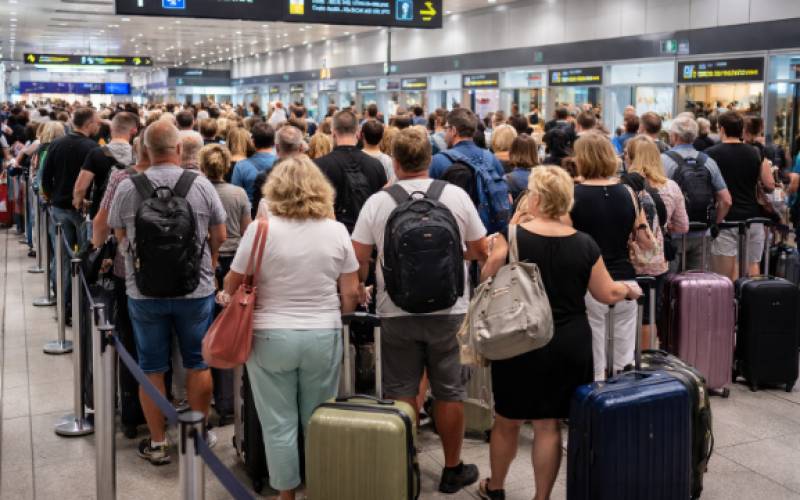
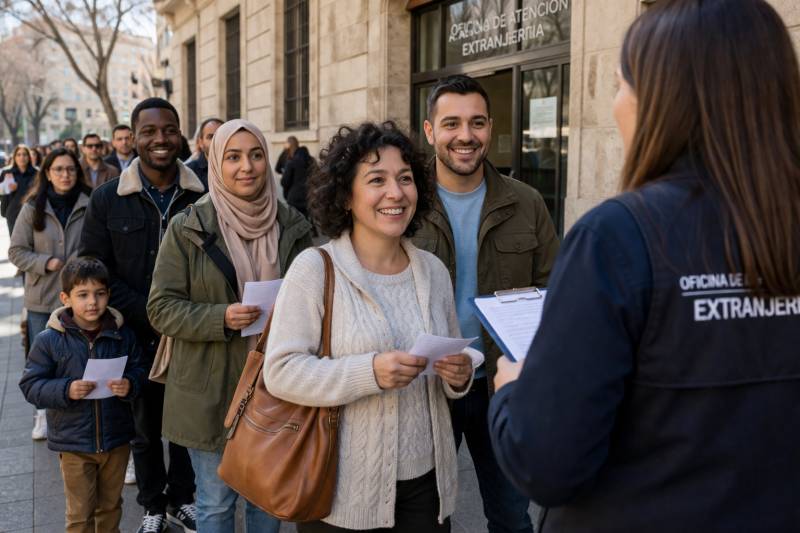
Spain’s new immigration regularisation process has begun with a mix of hope, confusion and long queues, as thousands of people across the country rushed to start their applications on Thursday April 16.
From early morning, consulates, embassies and local offices saw large crowds forming. Undocumented migrants queued outside public offices, determined not to miss out on the long-awaited chance to regularise their status.
Although the online system is now live, for many the reality is more complicated. Applicants must gather key documents including ID, proof of residence and criminal record certificates, often under tight deadlines. In-person applications are due to begin on Monday, with a deadline currently set for July 30.
Support organisations say demand has been overwhelming from the outset. Nearly 200 accredited groups are helping applicants navigate the process, but many are already stretched. “Some people have been waiting a long time,” one organisation explained. “They want to be sure this is real and understand exactly what they need to do.”
There is also concern among those who may struggle to meet the requirements. “These immigrants are afraid of being left out, and that’s why they’re starting the process from the very beginning,” one group noted, pointing to difficulties obtaining paperwork from certain countries.
At the same time, a key requirement is creating further pressure. Applicants must prove they meet at least one condition, such as employment, family ties or vulnerability. The need for officially recognised “vulnerability reports” has triggered what organisations describe as “a huge number of calls”, with interviews and assessments slowing the process.
For now, many organisations say it is simply too early to measure progress. “It’s still too early to take stock,” one group explained, as teams focus on answering questions and preparing for what is expected to be a surge in applications.
The people behind the process
Beyond the paperwork, the first day has highlighted the personal reality of living without legal status.
Yakelin, a 36-year-old from Peru, has been in Spain for nearly two years. After initially arriving on a tourist visa and later studying, she became undocumented in September 2025. Since then, everyday life has changed.
“This is going to change all of our lives, and many people sometimes come here with the idea of having more freedom, but I’ve realised that being an immigrant is the least free thing you can be these days.”
She describes avoiding certain places and situations, even routine journeys, for fear of document checks. Like many others, she hopes regularisation will bring stability, steady work and the chance to reunite with her family.
A different story, but a similar struggle, comes from Nezha, who arrived from Morocco after a long and difficult journey. Since settling in Spain, she has worked as a cleaner without a contract, facing unstable income and high living costs.
“My suffering here in Spain began when I arrived,” she says. “When you do find work, they pay you whatever they want. It’s not fair.”
Despite her doubts after previous setbacks, she is allowing herself a sense of hope. Her first wish is simple. “I want to go see my mother,” she says, explaining that she has not been able to return home since leaving, during which her mother’s health has declined. “Even if it’s just for a week,” Nezha adds.
For many, this first day has not been about completed applications, but about something more basic. A chance, finally, to move forward.
















 Spain’s new immigration regularisation process has begun with a mix of hope, confusion and long queues, as thousands of people across the country rushed to start their applications on Thursday April 16.