










Spanish News Today Editors Roundup Weekly Bulletin April 10

TOP STORIES: "What to expect from Spain’s housing market in 2026" & "The truth about migration and what Spain can teach the rest of Europe"
Hey all, happy to be back after the Easter break! Hope you had a good one too, whatever you got up to.
So we’ve got a nice selection of stories for you this week to get us back into the swing of things, from one of our favourite topics in the form of the Spanish property market, to some possibly surprising new stats which reveal what Spain would look like if it didn’t have any migrants coming in. All this, plus plenty of Murcia, Alicante and Andalucía news to satiate your quench for all things Spain.
¡Vamos allá!
Where Spain’s housing market is at for 2026
Spain’s property market has stayed firmly on the rise this spring, with prices still climbing fast and no real sign of a slowdown.
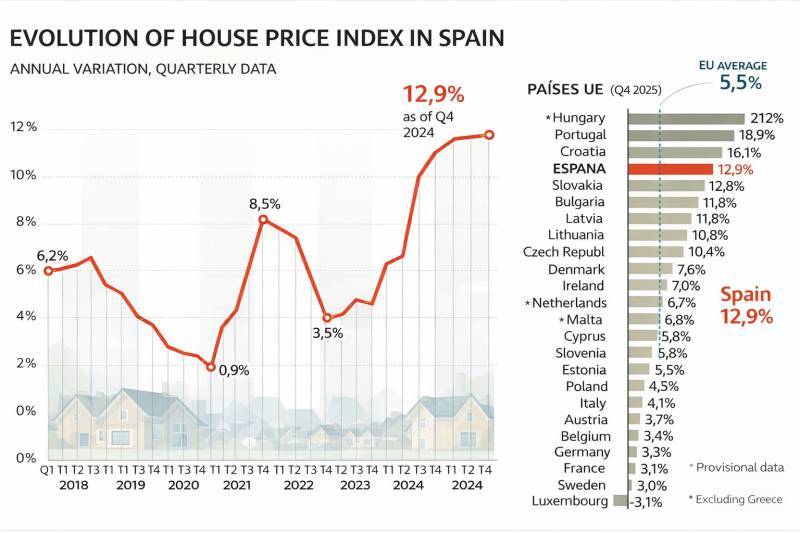
According to the latest Eurostat data, house prices rose by 12.9% in 2025, making Spain the fourth-fastest rising market in the European Union and well above the EU average of 5.5%.
It is a familiar story by now: demand is still running ahead of supply, and that has kept prices on an upward slope for more than a decade.
What stands out most is just how sustained this growth has been, with prices rising by around 31% since the end of 2022 and ending 2025 at a pace not seen since the housing bubble era in early 2007.
Across Europe, Spain is near the top of the table, while countries such as Italy, Germany and France have seen much smaller increases. Tourism and foreign demand continue to play a big role, especially in popular coastal and holiday markets, and analysts say that remains a major factor behind the pressure on prices.
For buyers, the message is plain enough: affordable homes are still getting harder to find, and the ladder is not getting any easier to climb.
That pressure is being felt especially strongly in Alicante province, where the market has opened 2026 on a very hot run indeed. Tinsa’s IMIE Local Markets report shows the provincial average now stands at €1,877 per square metre, up 18.3% on last year and 4.2% since the previous quarter.
Benidorm once again leads the pack, with average prices of €2,786 per square metre after a 20.5% annual rise. Orihuela, Alicante city and Torrevieja are all following the same trend, while inland towns such as Elche, Elda and Alcoy are also seeing increases, albeit at more moderate levels.
The province’s annual growth is comfortably ahead of the national average, and construction is also picking up, with 213 new buildings approved in January, 209 of them residential.
In short, there is no sign of cooling just yet.
The truth about migration and what Spain can teach the rest of Europe
“I said goodbye to my family and left with nothing.”
That is how Mohamed, a 30-year-old Moroccan man, described the moment he decided to risk his life for a chance at something better. Speaking to Spanish broadcaster RTVE, he said he took a taxi with his cousin and friends before swimming for half an hour to reach Ceuta. His reason was brutally simple: “I want to work and help my family. All of my friends, we want to work.”
Strip away the political slogans, the culture-war talking points and the ugly online rhetoric, and that is what migration often looks like at its most basic level: a person with very little trying to get somewhere that offers hope.
Mohamed is what politicians like to call an “economic migrant”, but what does that really mean? It means someone who has weighed up the danger of staying in their country against the danger of leaving and decided that the sea, the fences and the risk of death are preferable to the certainty of stagnation.
That should stop us in our tracks.
Because while Europe continues to debate migration in the abstract, real people are still dying in terrifying numbers on its doorstep. In the central Mediterranean alone, nearly 1,000 people have already died or gone missing in the first months of 2026, making this one of the deadliest starts to a year on record, according to the International Organization for Migration.
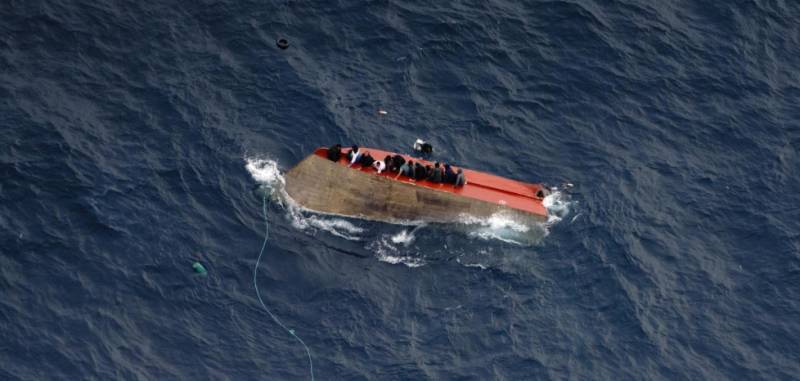
One recent shipwreck off Libya laid bare the scale of the horror. A boat carrying around 105 people capsized on its way to Italy. At least 70 died. Most of their bodies were never recovered. They simply vanished into the sea.
And for every disaster that makes headlines, there are others that barely register. Boats disappear. Families wait for calls that never come. Mothers are left staring at silent phones.
Spain knows this reality all too well. In 2025, almost 3,000 people died trying to reach Spanish shores, according to migrant rights groups, among them hundreds of women and children. This year, irregular arrivals to Spain have fallen sharply, largely because Atlantic crossings to the Canary Islands are down. But fewer arrivals do not mean the crisis has gone away. It simply means the routes have shifted, and the danger has moved with them.
This is the uncomfortable truth that much of Europe still refuses to face: people do not stop moving because politicians become tougher. They just take more dangerous routes.
For years, the EU has leaned heavily on border enforcement, offshore deals and deterrence policies. The theory is simple: make it hard enough, frightening enough, bureaucratic enough, and people will stay put.
The evidence, however, suggests otherwise. It turns out that the threat of war, poverty, climate shocks and political instability, along with the basic human desire to build a better life, are stronger forces than razor wire and patrol boats. You cannot policy away desperation.
And yet the political conversation across Europe has become increasingly poisonous. Migrants, especially Black Africans, North Africans and Muslims, are too often turned into symbols rather than seen as people. They are reduced to statistics when convenient and scapegoated when expedient.
Populist politicians understand that fear is easy to sell. It is much easier to blame outsiders than to confront housing shortages, stagnant wages, poor planning or creaking public services.
But here is where Spain offers a far more honest lesson.
Unlike many of its European neighbours, Spain has increasingly treated migration not just as a humanitarian issue but as an economic reality. The country has periodically regularised undocumented migrants, bringing people out of the shadows and into the formal economy. It is now preparing plans that could grant legal status to hundreds of thousands more people already living and working in Spain.
But this is not simply a case of naive idealism. Believe it or not, a calculating pragmatism underpins this radical policy.
Spain is ageing fast. The birth rate is low. The workforce is shrinking. The pensions system, healthcare services, agriculture, hospitality and elder care all depend on younger workers. Many of those workers come from abroad.
A recent report by Spain’s National Office for Foresight and Strategy made the consequences starkly clear. If immigration were cut by 30% over the next 50 years, Spain’s population could shrink to around 40 million by 2075. The country could lose millions of working-age people, GDP could fall by more than a fifth, and sectors from farming to healthcare would face severe shortages.
The report warned that more than 220,000 farms could be abandoned, tens of thousands of bars could close and healthcare waiting lists could worsen dramatically.
 Spain has actually recognised what many countries still refuse to accept – that they need the migrant. They need workers to harvest the food, to care for older people, staff hospitals, keep its pretty rural villages alive and to pay into the social safety net that all of us rely on.
And the consequences of Spain’s decision to welcome migrants with open arms have been clear from its strong recent economic performance, which has been supported in part by sustained migration. The IMF has noted that, with net migration expanding the labour force, the country has been able to support employment and maintain domestic demand. In Spain, migration represents 10% of the total incomes of the social security system, while it makes up just 1% of the total public spending. Regularising the status of undocumented migrants just makes good economic sense.
Now, this is not to say that immigration is effortless or that integration happens by magic. Serious countries need serious housing policy, better public services, language support, fair labour protections and proper planning. But pretending that shutting the door is the answer is both morally hollow and economically self-defeating.
Mohamed did not swim for half an hour in open water because he wanted to “take advantage” of Europe. He did it because he believed work, dignity and a future were worth risking everything for. That instinct is not something to fear. It is something to recognise.
The real question is not whether migration will continue; it will. The real question is whether Europe wants more bodies washing ashore while pretending deterrence works, or whether it is finally ready for a grown-up conversation about safe routes, humane policy and the undeniable fact that migration, when managed properly, is not a threat to prosperity. It is one of the reasons prosperity is still possible for the continent.
Murcia
Now let's take a look at what's been happening in Murcia this week, and we start with some very positive news for the local economy, as Murcia continues to shatter international tourism records in early 2026. Tourist numbers just keep getting better and better as more people discover this corner of Spain, with the Region seeing a strong start to 2026 for international tourism.
In February, 65,944 visitors from abroad arrived in the Region, up 6.9% compared with February 2025. This increase is well above the national average, which rose by 2.8% over the same period.
Visitors are also spending more while they are here, with total spending in February reaching €88.1 million, and the average stay was 8.42 days compared with 7.31 days nationally.
Visitors are coming in from all over Europe, with the UK still leading the way, and France, the Netherlands, Germany and Italy all seeing strong growth too. Belgium and Ireland are also continuing to play an important role, with Irish arrivals in particular doubling compared to last year. As more and more people discover Murcia, they’re being won over by its authenticity and traditional feel as well as its beautiful beaches, not to mention it’s fiestas. This has been a huge week in Murcia city itself, with one of the Region’s most iconic events taking place: thousands filled the streets for the capital’s 175th Bando de la Huerta, one of the main days of Murcia’s Spring Festival, celebrating the Region’s traditions, food and agricultural heritage. Families and friends filled the streets to enjoy the highlight of Murcia’s social calendar.
The day began in Plaza del Cardenal Belluga with the Misa Huertana, a traditional open-air mass, but around late morning, parks, gardens and squares were already filling up for the real fun. Groups arrived early to find a space and settle in for the day, bringing food, drinks and everything they needed to stay there all day. Lots of people wore traditional huertano outfits, which show off Murcia’s farming roots.
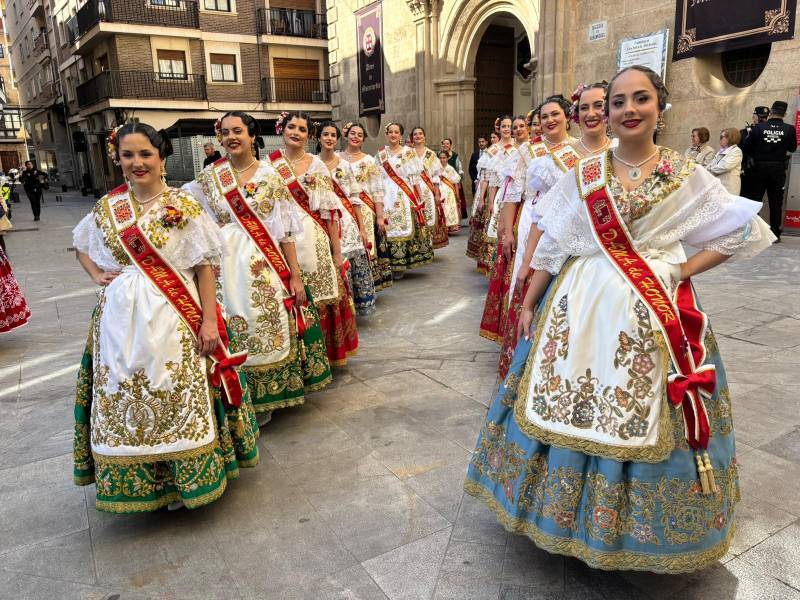
Food is a big part of the Bando, and much of it centres on the barracas, temporary open-air restaurants run by local groups. This year there were 39 in total, serving typical Murcian dishes. The main parade began at 5pm and attracted large crowds along its route, as always.
To mark the 175th anniversary, a historical-style carriage pulled by horses was included in the parade. Along the route, floats handed out local produce such as lemons and broad beans, which have become a well-known part of the event.
By the evening, the city was still busy, with gatherings and music continuing into the night, and for many, the Bando stretches well into the early hours. While there are bigger, more famous festivals in Spain like Sevilla’s Feria de Abril, being at the Bando feels like stepping back in time.
It’s authentic, sometimes even a little messy, but it’s all about spending time with friends and family. Just like the city itself, it’s a little undiscovered, but once you experience it, you won’t forget it!
Elsewhere in the Region, Cartagena City Council has approved 61 new homes across two developments as it works to support the property market. The council has given the green light for two projects, with a total investment topping €4 million.
The first is in Atamaría, close to La Manga Club, where 23 homes will be built on an 8,000m² plot with a €1.6 million investment. The second is in Calle Juan Fernández in the city centre, where 38 apartments will be added.
And while construction continues to move forward, the Region is also dealing with the aftermath of severe winter storms that left a significant mark on infrastructure.
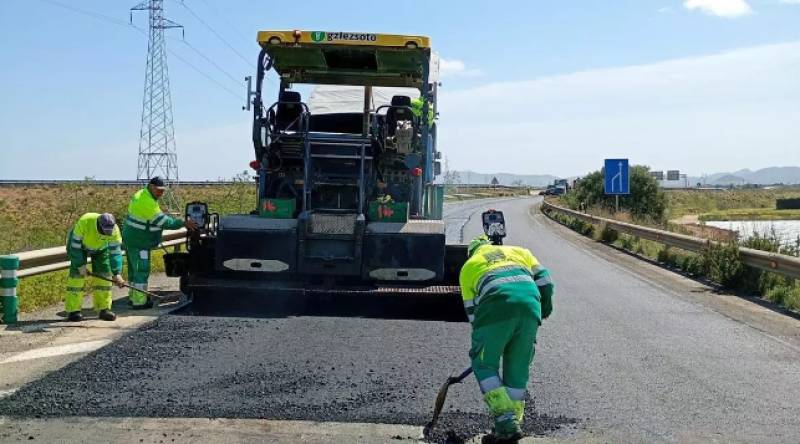 Emergency repair works are now underway on more than 228 kilometres of state roads across Murcia after storms between December 2025 and February 2026 caused widespread damage. The €6 million programme is already active in Lorca, Cartagena and Jumilla, with key routes such as the A-7 and A-30 included.
Drivers are being warned to expect disruption over the coming months, although closures will be avoided at weekends and public holidays where possible.
Alongside this, a separate €604,000 project is out to tender to replace a dangerous junction on the RM-F35 in the Campo de Cartagena area with a new roundabout after years of accidents.
Meanwhile, Hacienda del Álamo Golf Course in Fuente Álamo is set for a rebrand, with owners UGOLF planning to rename it Santa Elena Golf Club as part of a wider refresh.
The change has not yet officially taken effect, but has already divided opinion among local homeowners, with some welcoming the update and expecting a raft of updates to the much-maligned course itself, while others question whether it’s necessary at all, and isn’t just a bit confusing, if anything. UGOLF says more information will follow when the change is formalised, although no timeline has been confirmed.
 And finally, San Javier has presented its highly anticipated 2026 International Air Show on the shores of the Mar Menor, which will once again draw huge crowds.
The main event takes place on Sunday May 3, with aircraft coming from across Europe including the UK, Portugal and Italy, alongside displays from the Spanish Air Force and other international teams.
Although the long-standing Patrulla Águila will no longer be performing following its disbandment in 2025, it will be replaced by Formation Mirlo, ensuring the display programme continues in full force.
With practice flights, concerts, exhibitions and family activities also planned, the event has grown into far more than just an air show, becoming one of the key dates in the San Javier calendar.
As for something to do this weekend, be sure not to miss the Burial of the Sardine, which closes out the Murcia city spring fiestas on Saturday at 8.30pm. A bizarre local tradition and unmissable evening out if you’ve never seen it before!
Remember, you can always see our EVENTS DIARY for more events and activities coming up soon in the Region of Murcia:
Spain
After weeks of punishing price rises, oil markets briefly caught their breath this week, only to be dragged back into uncertainty almost immediately.
A two-week truce between the US and Iran sent Brent crude tumbling by as much as 16% to around $94 a barrel, while West Texas Intermediate fell to roughly $96, one of the sharpest drops seen in decades. It brought instant relief to drivers and businesses alike, especially after crude had pushed above $100 a barrel in recent weeks.
But by Thursday, the calm had already started to slip away, with Brent back up to $96.53 and WTI at $97.02 as fresh tensions raised doubts over whether the ceasefire would hold.
The Strait of Hormuz remains the key pressure point, of course, and with shipping routes still uncertain, markets are nervously watching every development in this little strip of sea that up until a couple of months ago was virtually unknown to most people, but which has now entered the common parlance of every household in the world.
“It is very difficult to plan because every day you get very different news,” one shipping executive said, while another warned that fees running into the millions would be “quite ridiculous for the entire industry.”
Even if peace holds, experts say Europe is unlikely to see an immediate drop in fuel or energy bills, with global disruption already having fed through to prices. For Spain’s households and drivers, that means the pump may stay unpredictable for a while yet.
 In the Canary Islands this week, where a two-year-old child was left in a serious condition after a drowning scare at a hotel pool in Fuerteventura.
The incident happened just before 10am on Monday April 6 in Jandía, when hotel staff raised the alarm after the toddler was pulled from the water showing signs of drowning.
Emergency services responded quickly, with an ambulance crew sent to the scene and paramedics providing urgent treatment before transferring the child to Fuerteventura General Hospital. The child’s condition has been described as serious, although no further medical update has been given.
Authorities have not yet confirmed exactly how the child came to be in difficulty, and the circumstances are expected to be reviewed. It was a swift and serious response, but one that leaves plenty of questions still to be answered.
Alicante
In Benidorm last weekend, seven people, including an 8-year-old child, were injured when part of the roof collapsed in the restaurant area of the Hotel Poseidon Palace on Sunday afternoon.
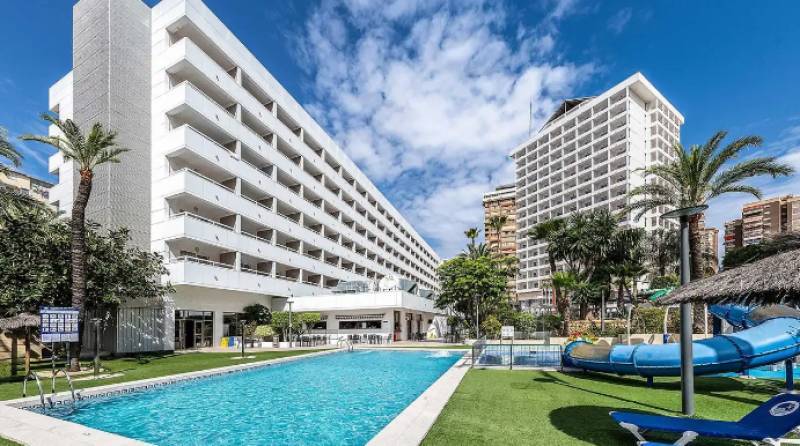 The collapse happened at around 2.20pm, sending plaster, air conditioning ducts and debris crashing onto tables and the dining room floor. Emergency crews responded quickly, with several ambulance teams and Red Cross staff attending the scene. While all injuries were described as minor, five people were taken to hospital for further checks, with the child and a 78-year-old man treated and discharged on site.
The cause is still under investigation, with municipal architects now assessing what went wrong. It is the sort of incident that inevitably rattles confidence, particularly in a town built on the promise of carefree holidays and dependable sunshine.
That sense of reliability, however, remains very much the selling point elsewhere along the coast. At Alicante-Elche Miguel Hernández Airport, easyJet has officially reopened its seasonal base for summer 2026, reinforcing the airport’s role as one of Spain’s key gateways for European tourism.
The airline is returning for its third consecutive summer with three aircraft based in Alicante and 1.7 million seats available across 22 routes. While the increase in capacity is modest at just 1%, the message is one of steady confidence rather than flashy expansion.
The UK remains the backbone of the operation, with up to 12 direct routes serving destinations including London, Manchester and Bristol, alongside continued services to cities such as Amsterdam, Naples and Prague.
And this kind of consistency matters, because more flights mean more visitors, more spending and, crucially, a sense that Alicante’s post-pandemic tourism recovery has settled into something more durable. EasyJet carried more than 2.2 million passengers through the airport last year, making it the second busiest airline there, and this summer looks set to continue that trend.
Back in Benidorm, the town is also looking beyond the next holiday season and towards a longer-term reinvention of its own. In a move that says rather a lot about how Spain’s coastal resorts are evolving, the council is preparing to spend €15 million to transform the city’s ageing bullring into a new cultural and community hub.

The project, known as Benidorm Open Arena, aims to convert the old venue into a flexible space for concerts, sport, youth activities and public events. It is backed in part by €6.4 million in European funding, though the council will still need to find nearly €9 million locally to make it happen.
For a place still too often reduced to clichés about package holidays and neon nightlife, it is a surprisingly thoughtful piece of urban planning. The plan is not just to modernise an old structure, but to improve links between neighbourhoods that have long felt disconnected from the town centre.
There is also a symbolic edge to it: a bullring, once a monument to an older version of Spain, may soon become a space designed more for concerts and community than capes and spectacle.
Andalucía
The long shadow of the Adamuz train crash is still being felt in Spain, and this week brought both new findings and a fresh call for accountability. Nearly three months after the derailment near Córdoba, 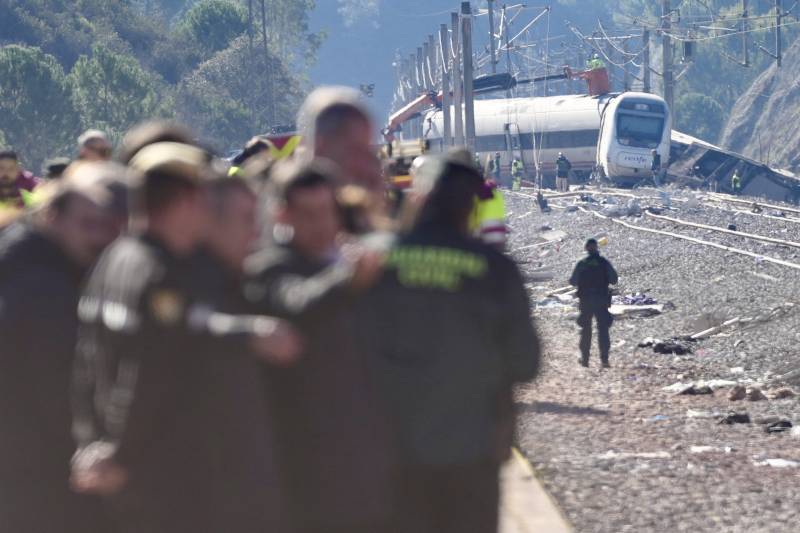 which killed 46 people and injured more than 100, victims and families are preparing to protest outside Congress in Madrid on April 15. The association says it wants to make sure “what happened” is not forgotten, and its president, Mario Samper, has been blunt in demanding answers.
which killed 46 people and injured more than 100, victims and families are preparing to protest outside Congress in Madrid on April 15. The association says it wants to make sure “what happened” is not forgotten, and its president, Mario Samper, has been blunt in demanding answers.At the same time, investigators believe the track may have broken around 22 hours before the accident, yet no alarm was triggered. A voltage drop was recorded on January 17, but the signalling system was not set up to flag that kind of fault. Authorities have ruled out sabotage, terrorism and driver error, leaving the focus on technical failure.
For the families affected, the goal is very simple: “to know the truth.”
There was also a warning for beachgoers in Campo de Gibraltar, this week, after a Portuguese man-of-war was spotted on Torreguadiaro beach. The creature, which looks like a jellyfish but is actually a colonial hydrozoan, is appearing more often along the Andalusian coast because of warmer seas, changing currents and easterly winds.
Experts are urging people not to touch it under any circumstances, even if it has washed up on the sand. Its sting can be extremely painful and may cause an allergic reaction, so the advice is to keep children and pets away and call 112 if one is found. It is another reminder that the spring sea may look inviting, but it still deserves a healthy dose of caution.
And to finish on a lighter note, if you are already making summer plans, Andalucía’s feria calendar is now offering plenty to look forward to. The season begins in early April with Chipiona’s Feria del Moscatel, followed soon after by Sevilla’s Feria de Abril, one of the best known in Spain. From there, the celebrations roll on through Jerez, Córdoba, Granada, Algeciras, Málaga, Almería and beyond.
Each feria has its own flavour. Jerez brings horses and sherry, Córdoba and Granada mark the start of summer, and August is especially busy with major fairs in Huelva, Málaga and Almería. By September, ferias are popping up across all eight provinces, before Jaén brings the season to a close in October with olive oil, flamenco and plenty of local character.
If there is one thing Andalucía does well, it is a party with a proper sense of place. Bring it on!

You may have missed…
- One fine every five seconds: Spain’s DGT breaks all records with six million penalties in 2025.
The Spanish traffic authorities issued more fines last year than at any point in recorded history, with the DGT handing out over six million penalties to drivers in 2025 for the first time since records began in 1961. - Sail Cartagena Bay with a three-hour catamaran adventure!
If you’re based at one of Murcia’s golf resorts and looking for a day out with a difference, Raquel Tours Murcia has something really special on offer: their catamaran excursions around Cartagena Bay are back for the summer season and with comfortable return transfers laid on from your resort, the whole thing couldn’t be easier to organise! - These are the 5 legal pitfalls that could cost you thousands when selling your home in Spain, and one easy solution.
Selling a property is often seen as a straightforward process: find a buyer, agree a price and complete the sale. In reality, the legal side of selling can be full of potential pitfalls, many of which can lead to delays, renegotiations or even financial loss if not handled correctly… - Los Alcázares brings down the curtain on the annual Berber Pirate Raids fiestas.
The Los Alcázares Berber Pirate Raids fiestas are now over for another year, having completed another very successful edition as the event celebrates its quarter-centenary! - Anti-war campaigners explain how to redirect your Spanish tax money away from military spending.
A campaign group in Spain is encouraging people to refuse to contribute to military spending through their income tax returns in 2026, with organisers describing it as a form of “active disobedience” against war funding. Find out how you can get involved if you want.
And that’s the end of that chapter, as they say. Thank you for continuing to read; we’ll have another edition for you next week.
See you then!