Date Published: 25/06/2026
Ticks are spreading into Spanish cities and experts say vigilance, not panic, is the right response
Climate change and urban wildlife are bringing ticks closer to home than ever before, with two serious diseases now a genuine concern in parts of Spain
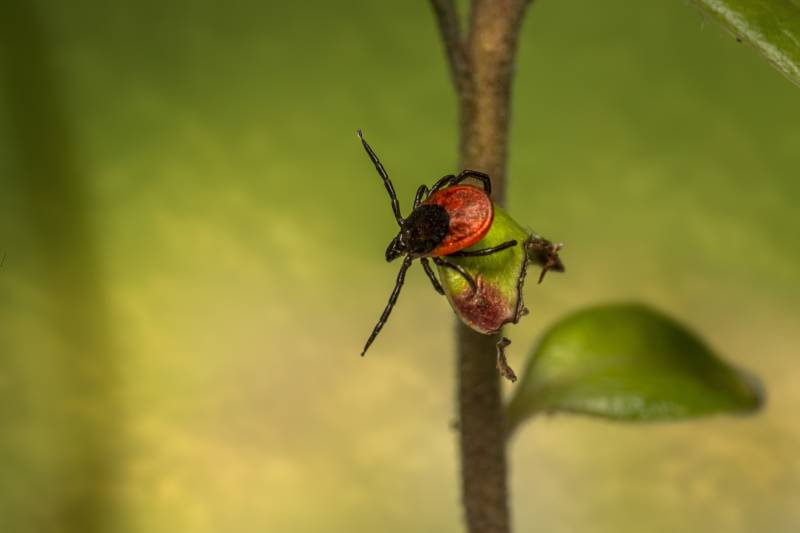
If you think ticks are something you only need to worry about on a country walk, think again.
Spain's leading experts on these tiny but potentially dangerous parasites are now warning that ticks have moved well beyond the countryside, appearing in urban parks and green spaces across the country, and that their presence is no longer limited to the warmer months.
Félix Valcárcel, a researcher at INIA and one of Spain's foremost tick experts, is clear on the situation. "Ticks have always been a risk, which is why we need to be vigilant. We are seeing that they are indeed increasing, but we don't know by how much due to a lack of prior data," he says.
The key drivers are climate change and the increasing presence of wildlife in urban environments, with rabbits, hedgehogs and wild boar among the species most likely to bring ticks into towns and cities. "If they're carrying a tick, it comes off and attaches itself, people walk by, and then they get bitten," Valcárcel explains.
Until recently, ticks in Spain were most active between March and October, with June and July the peak months. Now they are present year-round. Spain is also home to between 15 and 20 tick species, far more than the half-dozen found in Central Europe, partly because of the country's position as a bridge between Africa and Europe.
The urgency of the issue was underlined this week at a world congress on tick-borne diseases held in La Rioja, where experts confirmed that these parasites now represent "one of the main current challenges to public health," with climate change, globalisation and ecosystem modifications all driving their spread.
Valcárcel is keen to point out that not all ticks pose the same risk, and that even in drier parts of southern Spain, ticks can exist near streams with a constant flow of water, though in smaller numbers. The greatest risks remain in the humid north, particularly La Rioja, Navarre, the Basque Country and the Cantabrian coast, where conditions are ideal for the ticks that transmit Lyme disease. "The problem is that if the disease becomes chronic, it's difficult to treat," he warns. "Each person is affected differently, and it's very difficult to diagnose if you don't make the connection at the time of the bite."
The second serious tick-borne disease in Spain is Crimean-Congo haemorrhagic fever, known as CCHF, which can be fatal. Around twenty cases have been recorded in the country over the last decade, a third of which proved fatal, and a 68-year-old man is currently hospitalised in Madrid after a tick bite, in stable but serious condition.
The disease is concentrated in specific areas of Salamanca, Ávila and northern Cáceres, transmitted by the Hyalomma tick, a distinctly unsettling creature. "It has eyes and it chases you and is very frightening," says Valcárcel, whose team is currently searching for the tick colony responsible for the latest case. Men over 60 are the most frequently affected group.
There are currently no vaccines in Spain for any tick-borne disease. Valcárcel's practical advice is straightforward: do not panic, but do act promptly. If bitten, remove the tick as soon as possible, keep it in a container for identification, and use the free Tick Alert app for guidance on next steps. If redness or fever develops afterwards, see a doctor without delay.
Image: Erik_Karits/Pixabay
article_detail

|

















 Control de Plagas Levante works in all areas of the home, from kitchens and bathrooms to bedrooms, terraces and gardens, using professional methods tailored to each situation.