Date Published: 27/04/2026
Torre Pacheco plans new footbridge to reconnect neighbourhoods divided by the Rambla Sur
A long-awaited project aims to improve access, mobility and cohesion across the rambla floodplain
Torre Pacheco Town Council has set in motion plans to build a new pedestrian footbridge over the
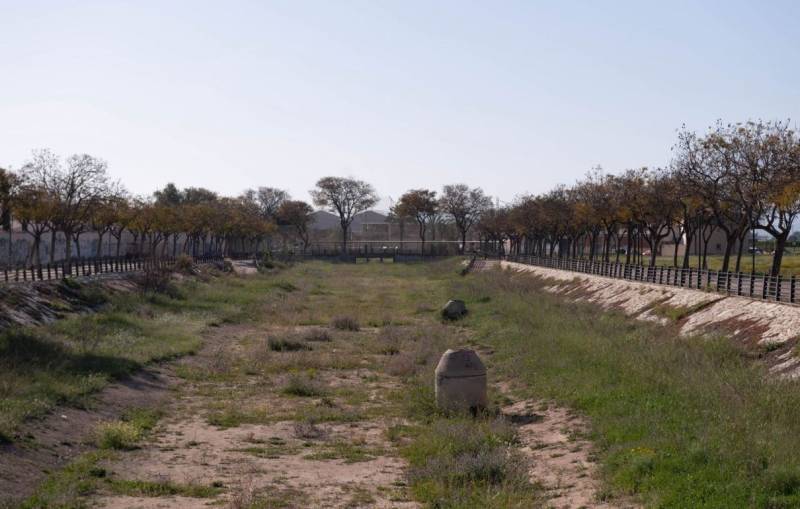
Rambla Sur, a project designed to better connect the town centre with neighbourhoods to the south that have long been separated by the natural dry riverbed that is used as a watercourse during episodes of heavy rain.
The initiative forms part of the municipality’s wider urban strategy, known as ‘Conectados desde otra mirada’ (Connected from a different perspective), which is backed by the European Regional Development Fund. The EU fund will cover 60% of the cost, with the remaining 40% financed locally.
While the bridge itself is the headline feature, the project goes further than a simple construction job. It includes the full technical design, supervision of works and health and safety coordination, covering every stage through to completion and opening.
The company
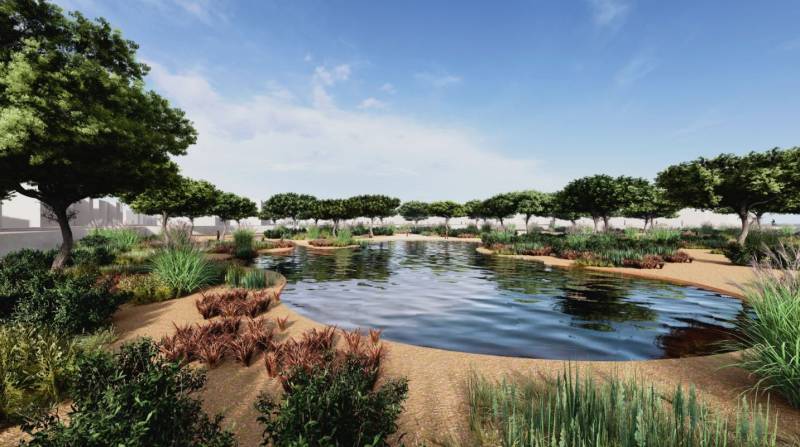
Orthem Servicios y Actuaciones Ambientales, SAU, based in La Raya (Murcia), was chosen in 2025 to be responsible for carrying out the renaturalisation works on the Rambla Sur under the ‘
La Memoria del Agua’ project to prevent flooding in Torre Pacheco town centre and the neighbouring municipalities, and revealed an impressively rendered image of what the area will look like at the end.
The newly planned bridge will be located near the Rambla Sur, in the central stretch where the weekly market is held. This area has already seen recent upgrades to public spaces, and the new crossing is expected to reinforce its role as a key link within the town.
By providing a safe and direct pedestrian route, the footbridge is intended to make day-to-day movement easier while creating a more practical and accessible connection between both sides of the municipality. Ensuring universal accessibility is a central requirement, meaning the design must remove barriers and be usable for people of all abilities.
Environmental considerations also play a significant role. As with all EU-backed developments, the plans must meet strict criteria on sustainability, energy efficiency and climate resilience. Broader principles such as social inclusion, gender equality and improvements to public space are also built into the brief.
Before construction can begin, a series of technical studies will be carried out to guarantee the bridge’s safety and suitability. These include hydraulic analysis of the rambla, geotechnical surveys of the ground conditions and detailed structural and lighting calculations. The aim is to deliver a design that fits naturally into its surroundings rather than imposing on them.
Sustainability extends to the construction phase as well. Contractors will be required to prioritise responsible waste management, with at least 70% of materials generated during the works to be reused, recycled or otherwise recovered.
The final design will also need to tie in with previous improvements carried out in the area, many of them funded through earlier EU programmes, to ensure a coherent and well-integrated urban landscape.
Images: Ayuntamiento de Torre Pacheco
article_detail

|

















 Control de Plagas Levante works in all areas of the home, from kitchens and bathrooms to bedrooms, terraces and gardens, using professional methods tailored to each situation.