

















Many people think of Murcia when it's time to plan their summer holidays. And it's easy to understand why the climate is perfect (if a little hot and humid at times), the beaches are fantastic, and there's plenty going on for families and kids along the coast.
But what often gets missed is just how special spring is here. Spring in Murcia is a magical time of year, and anyone who lives here, or anyone who has visited during these months, will probably agree.
Earlier in the year, around late February and early March, we had the beautiful almond blossoms in full bloom across places like Mula. Then came Cieza with its incredible peach blossom season, full of colour.
And now, it's time for something completely different again, the orange blossom in the Valle de Ricote, and the lavender fields of Moratalla.
One of the things that makes the Region of Murcia so special is that it doesn't just bloom once. It seems to change throughout the year, with different areas taking their turn to put on a show.
Right now, that show is all about scent as much as colour. In the Valle de Ricote, the air is filled with the unmistakable smell of orange blossom. It grows in the valleys and across villages like Ulea, Ojós, Ricote and Villanueva del Río Segura.
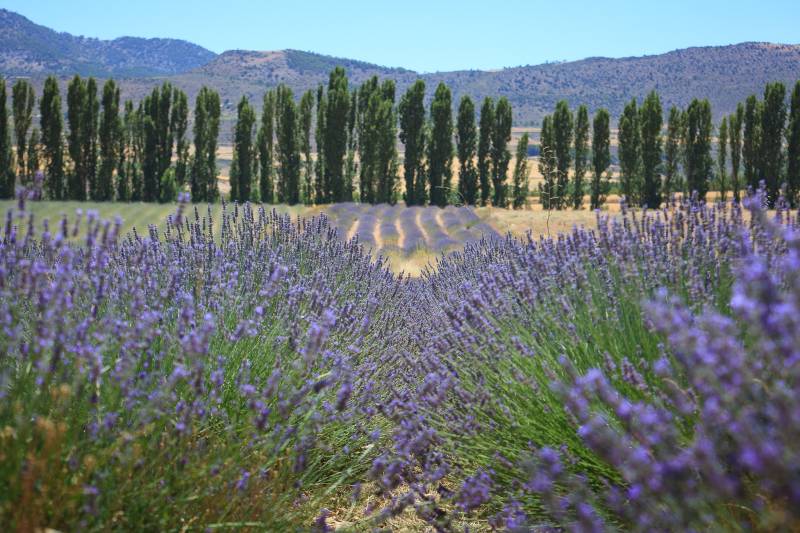
At the same time, further inland, Moratalla is beginning to turn purple as lavender starts to take over the fields and hillsides.
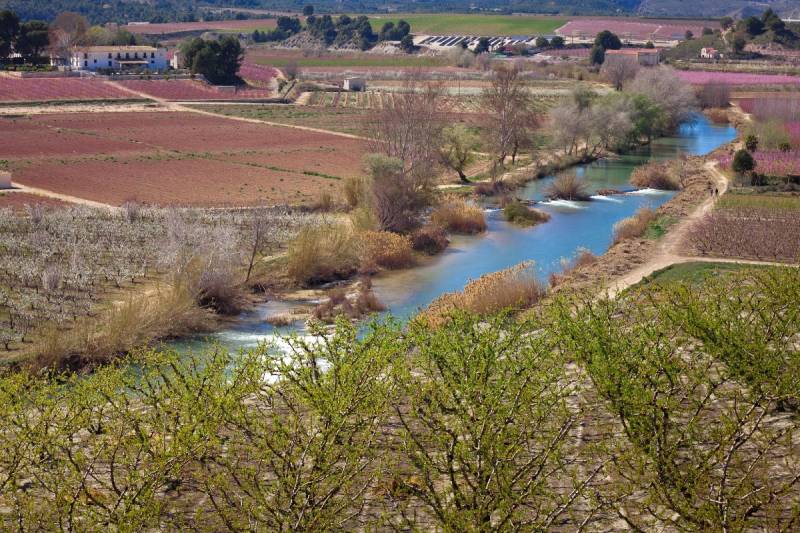
The Valle de Ricote is one of those places that still feels a bit under the radar, even though it is right here in Murcia. One of the best ways to experience it is the Ruta de la Floración del Azahar (Orange Blossom Season), a circular route through villages such as Ulea, Ojós, Ricote and Villanueva del Río Segura.
You can walk it, cycle it or drive it over a day or weekend, stopping at viewpoints, orchards and small local spots along the way. There are also guided visits to citrus farms where you can walk among thousands of trees, learn about the fruit and taste it straight from the orchard.
Food is also a big part of the experience. Traditional sweets such as bizcochos borrachos (drunk sponge cake!) are still made locally and can be found in small bakeries and cafés rooted in the area's history.
You can also do yoga at sunset among the lemon groves or sit on a terrace with a fresh lemon drink as the sun sets over the valley.
Creative workshops are part of the programme too, including soap making with lemon oil and perfumes inspired by orange blossom and local herbs.
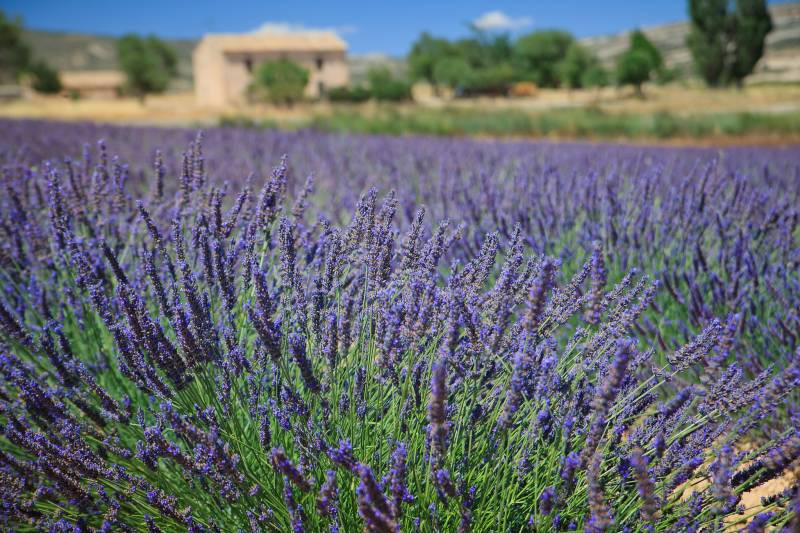
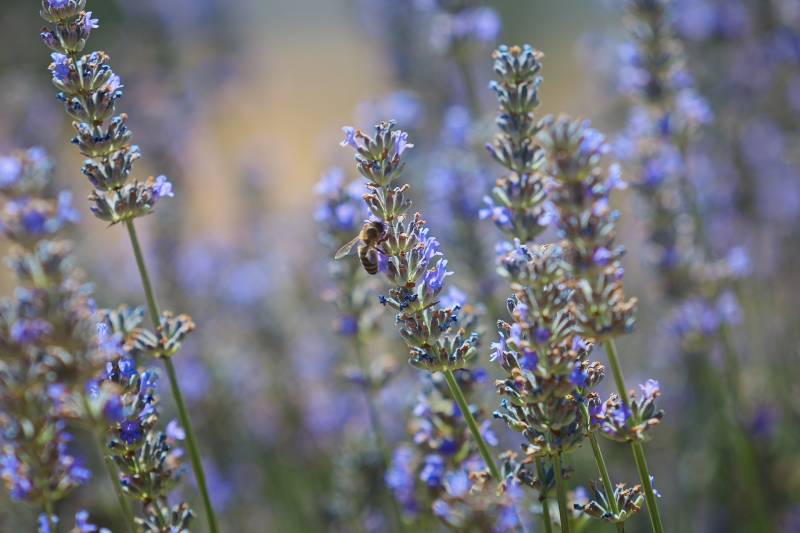
While the Valle de Ricote smells of citrus fruits, Moratalla turns purple with lavender and fills the air with its scent. As the weather warms, lavender begins to spread across the countryside. The colour slowly covers the fields and hills, and the scent becomes stronger as you move through the area.
And Moratalla really makes the most of the lavender season with a packed programme of events. Under the name Lalavand, the area arranges oodles of activities that run from spring into early summer.
These include nature-based experiences such as eco-routes, birdwatching, mushroom foraging and guided walks through lavender fields. There are also workshops on essential oils and soaps etc., along with family events and an outdoor cinema in the warmer months.
Local groups, associations, families and cultural organisations all take part in this, making it feel more like a community event where everyone is invited. There are also cultural events, traditional celebrations, music, book fairs, astronomy nights and sporting events.
Alongside the cultural events, there are also job fairs, training opportunities and rural development projects as part of the programme.
It is easy to think of Murcia in terms of summer holidays, beaches and long hot days by the sea. And that is true, it is a big part of life here. But Spring shows a different side to the Region. It might not be sunny all the way, you may even catch the odd shower, but it's still one of the best times of year in Murcia.
Check the local town hall websites for more information about the best dates to go and the programme of events.
Images: Murcia Tourism Board
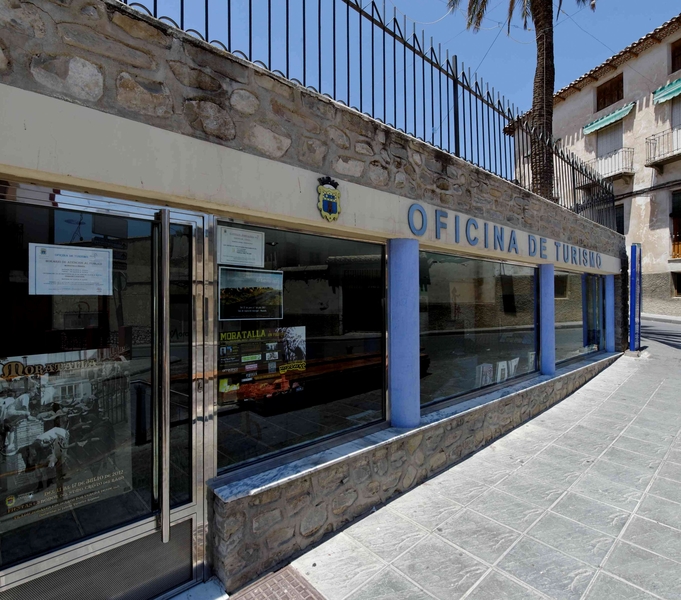
 The tourist office in Moratalla is located below the Town hall at the main entrance into the centre of the Moratalla Urban centre.
Moratalla is the most North-westerly municipality in the Region of Murcia and is renowned for its outstanding natural scenery, pine forests and open unspoilt beauty.
It also houses the most important prehistoric rock paintings within the region, with sites such as Cañaica del Calar, Fuente del Sabuco, Molino de Capel, Andragulla, La Risca and El Molino containing more than 50% of the Arte rupestre of the Region of Murcia. Information about these can be found in the Casa de Cristo in the interpretation centre for rock art.
Moratalla is best known for its natural attractions, walking routes and beautiful countryside and the tourist office will be happy to provide a list of lodgings and accommodation as well as maps showing the main walking areas.
The main attractions to visit are the castle, although this is only open occasionally, and the Casa de Cristo, which houses the Prehistoric Rock Art Interpretation centre, although it is pleasant to walk through the old streets of the town and admire the views from both the main Plaza and the viewing point high above the town.
Moratalla Tourist information office
C/ Barrio Nuevo, s/n
Bajo del Ayuntamiento
30440 Moratalla - Murcia
Tlfno. 968 730 208
Click for map, Calle Barrio Nuevo S/n Moratalla
Opening Hours for Moratalla Tourist office
 Tuesday to Friday 10am to 2pm and 4pm to 6.30pm
(Summer evening hours 5pm to 7.30pm)
Saturdays 10am to 2pm
Closed: Christmas day 25th December, 1st and 6th January, 11th to 17th July- depending on the programme of the Fiestas of Stmo Cristo del Rayo
Where is Moratalla?
Moratalla is in the North-west of the Region of Murcia, accessed via the Autovia del noroeste from Murcia to Caravaca de la Cruz.
On its North and western borders it joins Albacete, to the east is Calasparra, and to the South, Caravaca de la Cruz and Cehegín.
Click for map, Moratalla
There is a dedicated town section for Moratalla, or to go the North-west section, which contains a mixture of What’s on, local news and community information across the North-west or town by town information, accessed via the map box at the bottom of every page.
View Moratalla, Murcia in a larger map