Guidelines for submitting articles to Mazarron Murcia
Hello, and thank you for choosing Mazarron Murcia to publicise your organisation’s info or event.
Mazarron Murcia is a website set up by Murcia Today specifically for residents of the urbanisation in Southwest Murcia, providing news and information on what’s happening in the local area, which is the largest English-speaking expat area in the Region of Murcia.
When submitting text to be included on Mazarron Murcia, please abide by the following guidelines so we can upload your article as swiftly as possible:
Send an email to editor@spaintodayonline.com or contact@murciatoday.com
Attach the information in a Word Document or Google Doc
Include all relevant points, including:
Who is the organisation running the event?
Where is it happening?
When?
How much does it cost?
Is it necessary to book beforehand, or can people just show up on the day?
…but try not to exceed 300 words
Also attach a photo to illustrate your article, no more than 100kb
PROPERTY SEARCH
article_detail
Date Published: 06/01/2026
What the Venezuela crisis means for the Region of Murcia
ARCHIVED ARTICLE -
Oil imports aside, trade ties between Murcia and Venezuela have been shrinking for years
In one of the most dramatic foreign policy moves in decades, the United States has launched an unprecedented intervention in Venezuela, which the Trump administration says has effectively removed long time leader President Nicolás Maduro and placed Washington at the centre of the country’s political and economic future.
Donald Trump has claimed responsibility for the arrest of President Maduro and his wife, Cilia Flores, who, according to US officials, have been taken to the United States to face charges including drug trafficking and narco terrorism.
President Trump has described the operation as a decisive success, insisting that the US will oversee Venezuela on a temporary basis while managing a political transition. He has also said that American companies, particularly in the oil sector, will invest heavily in rebuilding infrastructure and restoring oil production.
The move has sparked widespread international condemnation. At an emergency United Nations Security Council meeting, numerous countries described the US action as a crime of aggression and a violation of international law. Russia, China, Cuba and several European nations, including Spain, have criticised Washington for what they describe as an attack on Venezuelan sovereignty.
Spain has firmly rejected the US military intervention. President Pedro Sánchez has stated that Madrid will not recognise any foreign action in Venezuela that violates international law or the United Nations Charter.
President Sánchez has emphasised that while Spain never recognised Nicolás Maduro’s government as legitimate, it also cannot support or legitimise a foreign military operation that undermines sovereignty and regional stability.
In 2024, two Spanish nationals were arrested in Venezuela for reportedly trying to assasinate Maduro, a plot which the Venezuelan government alleged was plotted by the Spanish government itself. This accusation was never proved, and was dismissed as untrue by Spain government sources.
The crisis has also triggered protests in Spanish cities such as Madrid and Barcelona, where thousands of demonstrators have taken to the streets to denounce what they describe as imperialist aggression by the United States.
Despite the dramatic nature of the crisis, its direct economic impact on the Region of Murcia, and indeed Spain as a whole, is expected to be limited.
Venezuela is not a major trading partner for Murcian companies and does not rank among the Region’s top export destinations. In fact, it sits well outside the first tier of markets, far behind key European partners such as France and Germany. That said, the Venezuelan market still holds some strategic importance for a small number of Murcian businesses, particularly in sectors such as industry, textiles and agri-food.
Trade between the Region of Murcia and Venezuela has been shrinking for years. Since the Covid pandemic, exports have fallen sharply, dropping from more than €150 million in 2019 to just a few million euros annually in recent years. By 2025, exports had fallen to little over €3 million, reflecting both Venezuela’s prolonged economic crisis and growing political instability.
Regional authorities believe this means the fallout from the current situation will be minimal. The Regional Ministry of Business and the Development Institute have said they are monitoring events closely but don’t expect significant disruption for Murcian exporters.
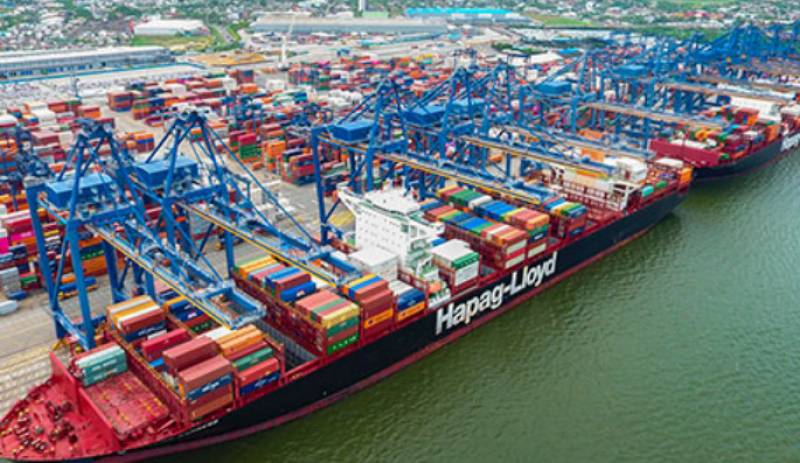
Where Venezuela does still matter is energy. Imports from the country are almost entirely linked to crude oil, which arrives mainly through the Port of Cartagena. Venezuela remains one of the world’s largest holders of oil reserves, and oil shipments have historically played an important role in port traffic.
However, even this trade has declined sharply. Imports from Venezuela fell by more than 75% in 2025 compared to the previous year, underlining a broader reduction in commercial ties.
Outside the energy sector, imports from Venezuela into the Region of Murcia are small and diverse, ranging from timber to printed materials, and are not considered economically significant.
Overall, while the geopolitical crisis has drawn global attention and sparked political reaction in Spain, its direct economic consequences for the Region of Murcia and the country in general are expected to be limited, reflecting a relationship that had already weakened long before the latest events unfolded.